Saturday, 29 August 2020

DCeased and Batman: Last Knight on Earth (DC)


DCeased

Writer: Tom Taylor

Artist: Trevor Hairsine

Batman: The Last Knight on Earth

Writer: Scott Snyder

Artist: Greg Capullo

Well, DC Fandome finished last week. We got teasers/trailers for The Suicide Squad and The Batman. Just on the side, is this what DC intend to do with their properties? Put "the" at the start of the title and hope people forget what came before? I'm surprised at this stage they aren't calling it The Wonder Woman 84, the trailer for which was good, but not surprising. We got Gotham Knights- better known as The Batfamily can't have anything for themselves without neckbeards throwing a tantrum. Oh- there was also that Suicide Squad video game trailer- the squad seems to be taking on Superman again, because that seems to be how DC promotes characters; forget writing engaging stories, just have them fight Superman and-- wait a minute: Why are all these characters carrying guns. I get Harley Quinn and Deadshot carrying them, but King Shark? If I play as King Shark, I want to tear mooks apart with my mighty jaws, not wave a target over them and hold down R2. And why does Captain Boomerang have a gun? Can we notice no other long-range weapon that he might use? One that's his name for example?

You know what was conspicuously absent? Announcements about DC's comic line. The Milestone Universe is coming back, but that's outside the mainline DC imprint. On the back of constant layoffs, one can't help but think that DC stands about as much chance as American schoolchild on a weekday. With that in mind, let's review a couple of books that, appropriately are about the end of the DC universe. Let's call it The AT&T Double Bill.

First up, DCeased. This story falls in the "zombie apocalypse" school of the end of the world and to be fair, writer Tom Taylor does an admirable job working this into the DC universe. The thing that turns people into zombies is a corrupted version of the Anti-Life Equation, and it's even carried to Earth by Cyborg. My problem though is that I'm well and truly uninterested in zombies. I don't care for hordes of brainless creatures desperate to feed- I teach middle schoolers and such things always feel too much like my job. So I started reading ready to be bored to death, but by late that same night, I was still reading, which is like a vegan discovering their favourite sandwich had ham in it. So what was it, then? 

Well, firstly, the story doesn't bother with the whole "humans are the real monster" schtick, and instead sticks to saying that "actually, the real monsters are the ones mistaking your face for a violet crumble". It's nice to see a zombie story not pretend it's commenting on any moral complexity. It leaves the story to focus on the tragedy of loss. Characters have to kill their best friends, they lose their parents, they grapple with the constant realisation that they're just not going to win. It's an oddly refreshing tragedy, one that avoids one of the commen pitfalls of this kind of story. Right from the get-go, it's clear that things are completely... can we say "American-2016-election'ed"? When we know that this is going to end badly, we therefore don't end up with our hopes dashed when that's exactly what happens. Rather, what little hope remains in the story ends up all the more sweet, and that's exactly what DCeased does, so it gets four out of five violet crumble faces.

And since there's really no way to segway into this, let's move on to Batman: Last Knight on Earth. This is a slightly more complex story that DCeased: A cloned Batman wakes up to find that the entire world has gone to hell... actually it's not that much more complex, really. This is a Scott Snyder book, so expect a lot of Scott Snyder tropes to make an appearance here. There's an evil version of Batman, a new take on a fight with Superman, and Joker's here. Actually, it's just Joker's head, but Snyder's voice for him this time around is so different to his previous work, that it actually makes him the best person in the book. I haven't been made to laugh by the Joker for a long time, but here I was, chuckling every time he asked if he could be Robin, or making some pun about whatever danger Batman found himself in. Then I remembered that I'm not supposed to enjoy the Joker, because that makes me an incel or something- NO, I'M NOT EXPLAINING THAT!

Of course, the other thing that seems to happen in Scott Snyder books is that the setting becomes a character of it's own. In Batman, it was Gotham, in Dark Nights: Metal, it was the dark multiverse and here, it's the whole damn world. Snyder makes full use of this setting, letting us explore not every inch of it, but enough that it can be enjoyed. I'm reminded of Old Man Logan in many ways, and that's not really a bad thing. Both books employed a "What if we did Mad Max, but used our most popular heroes with the pointiest ears" approach, and the results have been just distinct enough to make me want to see more of it. It's been heaps of fun and, like the book before, also earns four out of five Joker incels.

What? That's not good enough? Fine. I suppose I'd better declare a winner in this double-bill. At the end of the day, I think I have to give it to Last Knight on Earth- if for no other reason than that it manages to give us all the suspense of an end of the world story without resorting to that thing that every bit of pop culture seems to be going to, but if you want one that better represents the state of DC, best go DCeased. A plague brought on the world by means of social media? Sounds like the Snyder Cut to me! Gfaw Gfaw!

Actually, that looked pretty good...

Monday, 23 March 2020

This Was Almost: Power Rangers

So... most people likely to read this are probably quarantined by now (I mean, not Australia- we're all practicing unenforced social distancing which weirdly means not closing schools for some reason?) and I figure if I even try to talk about... y'know... that... people are going to feel more than a little irked.

How about something cool about Power Rangers? You know, the show that's essentially a re-skin of the Japanese Super Sentai franchise, using all the action scenes, but somehow getting a more ethnically diverse cast right from the beginning with zero whining from alt-right whatever-gaters?

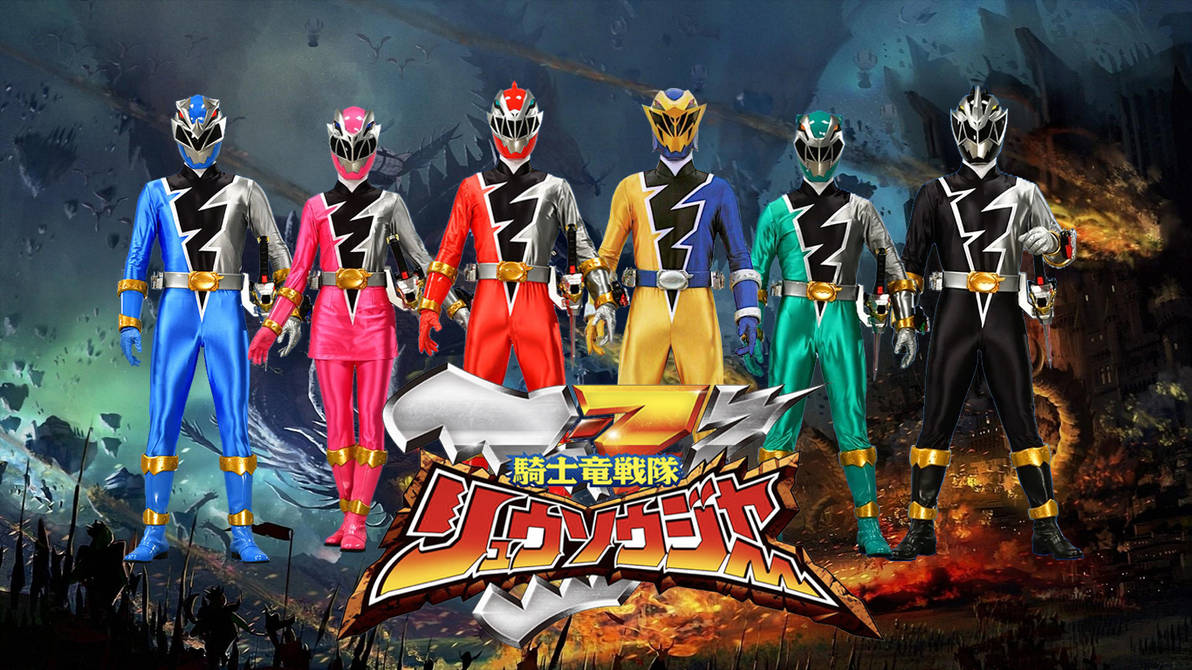
So a few weeks ago the Rangers fandom was rocked when Hasbro announced that the next Super Sentai series announced for adaptation was Kishiryu Sentai Ryusoulger.


Pretty cool, right?

Well, the fandom lost their collective mind because this was going to be the FOURTH dinosaur-themed Power Rangers when Power Rangers: Dino Charge (which is exactly what the name suggests) was still fresh in memory.

Now, obviously, the nostalgia factor is there. You want to hit the fanbase right in the childhood? Make them think of Mighty Morphin'. But why is that season the big deal? Why is Mighty Morphin' Power Rangers the big, first season, especially when it's popularity in Japan was only so-so at best?

Well, it wasn't always going to be like that. Today, I want to take you into what could could have been Mighty Morphin Power Rangers. We'll see what the show was about, speculate about how a Sentai adaptation would have played out, and why it didn't turn out that way.

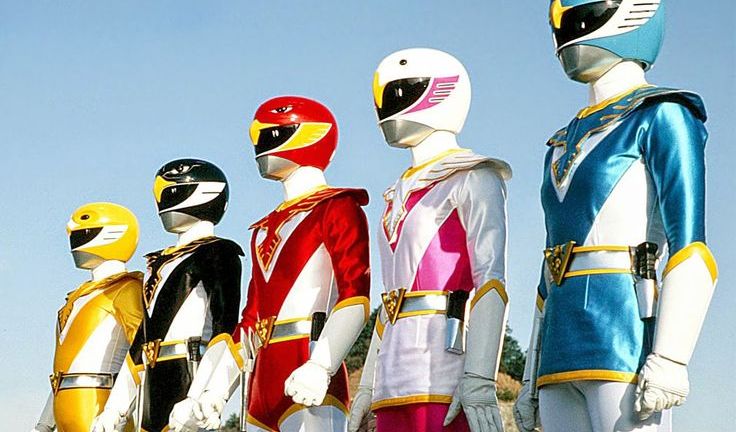
Before going too much further, I just want to make clear that this is all based on rumour. I've research this to some degree, but can't find anything concrete that this definitely is what was going to happen, but the rumour was that when first trying to start Power Rangers, show creator Hiam Saban was interested in adapting not Kyoryu Sentai Zyuranger, the show that we now know as the original Power Rangers, but it's predecessor, a show by the name of Chojin Sentai Jetman, or Superman Squadron Jetman.


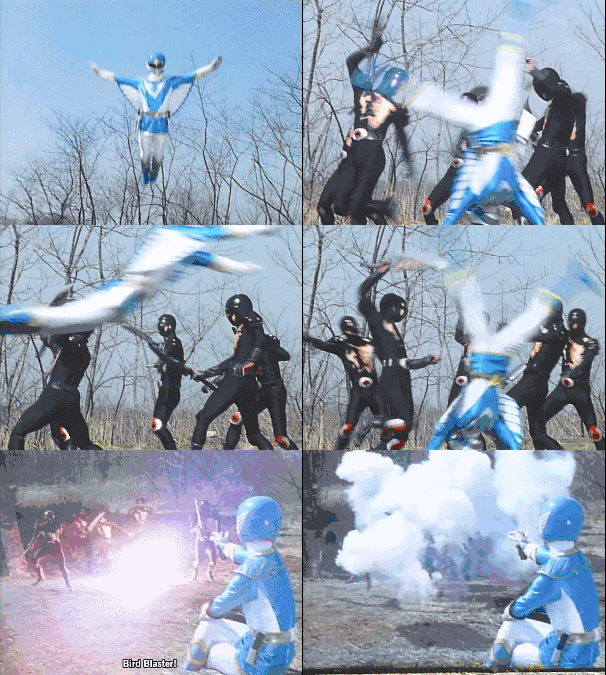
If you look closely at their helmet designs, it's pretty clear that they aren't Dinosaur themed. Nope, the main motiff for these rangers was birds: Red Hawk, White Swan, Yellow Owl, Blue Swallow and Black Condor. 

Do I need to spell out why this show wasn't adapted?

I do?

Okay, well, imagine you're making this show set for a 1993 release date. Do you go with birds? Or do you go with Dinosaurs in the same year that Spielberg releases Jurassic Park? Look, Jetman was a good show- unlike Zyuranger, it was regarded as some of the best Super Sentai had to offer, but you tell me which one's more instantly marketable.

Another advantage Zyuranger had over Jetman is that
Zyuranger had the sixth ranger, and without the presence of Tommy Oliver, I don't know if the show would have been anywhere near as popular.

But let's speculate: what would it look like if Mighty Morphin Power Rangers used Jetman as a base?

Honestly, it wouldn't be that different.

See, when the original American writers for Power Rangers saw the Sentai footage, they saw it with absolutely zero subtitles. They had to piece together what was going on from visuals and music with no knowledge as to the what the characters were saying.

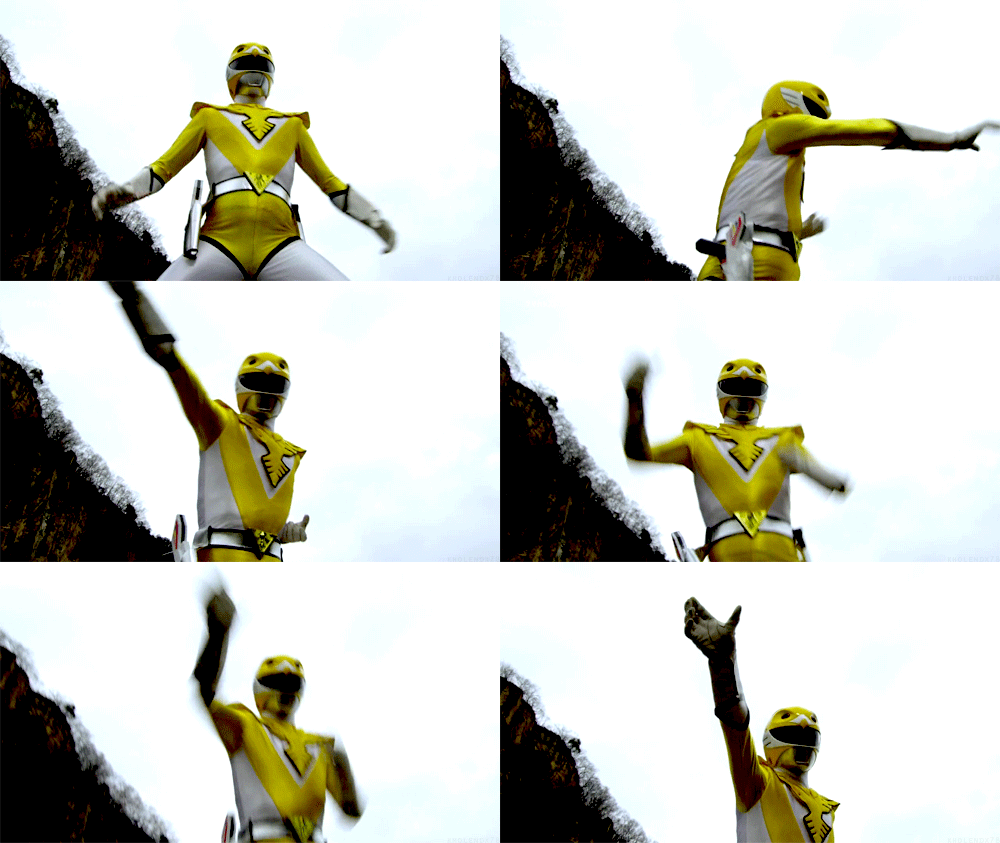
Because of that, for the most part you could have had almost the same first season. The suits and zords would have been different, but Jason? Totally could be the red ranger again. Zack? Definitely Black. Kimberly? Tell me White Swan couldn't as easily be called the Pink Ranger. The only characters who would change costumes would be Billy and Trini and that's just because the blue and yellow rangers look like this:


And yeah, I know the yellow ranger in Mighty Morphin' was originally played by a male actor, but convincing kids that the two above aren't their original genders is something a stretch.

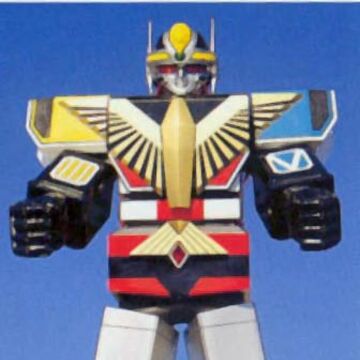
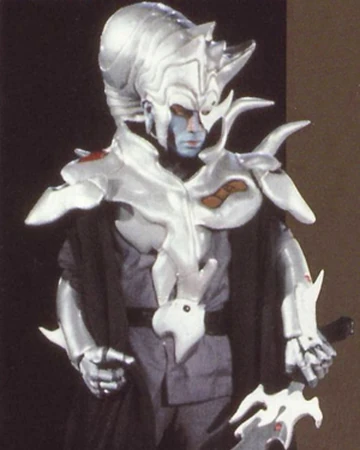
There would also, with no sixth ranger, be no Tommy, and no Rita. Rita would be replace by this guy:


But aside from that, the story would be basically the same. Bad guys come to Earth with intentions to destroy it because... bad guys... Zordon recruits five teenagers with attitude. Said five teenagers beat up a monster of the week until the next season, where they use the next sentai's Zords and maybe even the suits to keep the toyline healthy and the cheaply-made show continuing.

So that's what Power Rangers almost was. You can find Jetman  in some places online and on DVD if you're interested in seeing the show. Other than that? This was fun. Might do another one of these some time. Beast Wars Transformers, after all, had a very different original plan as well...

Friday, 8 November 2019

Scary Words: Plot Holes


This is going to be the last one for a while, I'm getting tired of these.

So last year, YouTuber Patrick H Willems released a video entitled "shut up about plot holes". Not long after, a range of TOTALLY rational™ and intelligent™ response videos came up mostly along the lines of "NOOOOOO, THAT'S PRETENTIOUS™!!! YOU THINK YOU'RE BETTER THAN ME?!? NOBODY'S BETTER THAN MEEEEEEE!"

It's a weird thing, because at no point did Patrick insist that the people who focussed on plot holes were in any way inferior, yet nobody wanted to take on Moviebob when not long after, he made a video agreeing with him, but then going further to suggest that people only look at plot holes as a backdoor into making racist/sexist statements. THAT'S someone suggesting their better than you, but it's from a bigger channel, isn't it?

So you know what, let's talk about plot holes. Not as a phenomenon that has overtaken everything in discussions about popular culture, but as a weapon. Because that's what Scary Words is about: taking words that people use a weapons and disarming them until they're as effective as whispering "boo" to take down a howitzer. So let's talk about it.

The general idea around the plot hole as a criticism is that if something doesn't make logical after being argued every which-way possible, it therefore takes people out of the moment and is "bad writing".

Is that all there is to writing, though? A logical progression of "x therefore y"? What about tension? What about character progression? What about creating a satisfying conclusion to the whole story? Are we really going to sacrifice enjoyment of a story to CinemaSins?

In fact, since so many plot hole criticisms start with "why didn't (he/she/they) just..." a lot of them can be answered with "because it would be boring."

Why didn't Superman give the spear to Wonder Woman?

Because it would be boring- seriously, are you going to rid us of arguably the only moment in Batman v Superman with emotional weight just so it can be logical FOR THIS PARTICULAR MOMENT? 

Why didn't Thanos just make more resources in the snap?

Because it would be boring- Are you telling me it would be more interesting if there WASN'T a fight with Thanos? If he just made more resources and Tony an Co just said "Right, hitchhiking home it is"?

Why did Captain America just land the plane?

Because it would be boring- as much as I hate this scene, Cap coming back heroically would have robbed us of the best scene in The First Avenger where he wakes up in modern day America.

In all of these examples though, there's another implication in the question- the critic insists that the character should act in the same way the critic does. The character, in essence has to stop being themselves. Superman giving the spear to Wonder Woman (who he doesn't actually know at this point) instead of using it himself is profoundly un-Superman. Thanos deciding to kill nobody is pretty out of character from someone who has spent most of his life turning people into Jackson Pollock paintings. Captain America... well, he certainly kept the attitude of Captain America as he went down, so there's that.

But let's entertain the idea that every plot hole makes the story nonsensical for that moment. So what? Is the character's emotional journey therefore invalid? Are the themes of the story somehow diminished? If the answer's "no," does the plot hole really matter?

Allow me to suggest a theory: see, very few people talk about the plot holes in The Dark Knight or Avengers. And that's for a simple reason. When you like a movie, you aren't looking for plot holes. You aren't looking to prove that the movie you didn't like was bad, because you liked it. People outside of joking about it don't care that Captain America didn't land the plane because oh man, we're *this* close to an Avengers movie now. If your mind is finding plot holes, chances are you don't like the movie as it is and if that's the case, why? Is the tone not connecting? Do the themes not hold true for you? Or is it just a movie made for an audience that you're not a part of?

I think, like all things, this word just boils down to insecurity. You don't like something? That's okay. Yeah, I'm not one of those people that judges morals or intelligence based on whether or you like something. The rise of the digital age means that we need to defend our religious beliefs, our political beliefs, our choice of sandwich filler, our preferred sock colour; can't we have one choice that we DON'T need to defend? Can't we just like what we like and not what we don't? It's just comics. It's just movies, TV, video games. Nobody's going to be sentenced to death if you like Zack Snyder movies, nobody is getting wrongfully put into prison because you prefer Joss Whedon. The great thing about pop culture is that it's ultimately frivolous. So let's treat it frivolously.

That's the end of scary words. I hope that no matter your opinion of any pop culture... thing... you can feel comfortable in what you enjoy. That what all of this used to be about, after all. We keep telling everyone that these things make us happy.

So let's let them.

Tuesday, 8 October 2019

Scary Words: Objective


So I finished marking student work, went on holiday, came back and now I'm back into it.

For a hobby so focused on fiction, we in the pop culture world certainly place a lot of emphasis on fact. I don't know if there are any other theories on why, but my theory is that unlike the "finer" aspects of culture, much of pop culture (particularly where sci-fi and superhero stories are concerned) is produced by the art crowd for the math, science and history crowd.

Now the art crowd doesn't care much for objectivity. For art, literature, film and video games, the goal is to achieve an emotional reaction more often, if not just as much as a logical one. Yet that's not the way that so much of nerd culture sees it. To nerd culture, logic is the paramount virtue, and one proves that through objective fact.

But does the term "objective fact" apply to art the way we think it does? For those who like to bandy the term around, "objective" means factual- and you don't have a problem with facts, do you!? What are you, stupid?

Okay, let's take apart this notion, because frankly, it's ridiculous. Let's take some examples: Star Wars: The Last Jedi is "objectively" a bad movie because Rey is deemed as being flawless. Batman v Superman is "objectively" a bad movie because it lacked an upbeat tone. 2016's Ghostbusters is "objectively" a bad movie because it doesn't recognize the original as canon. Are these objective statements? Well, partially. Rey is pretty damn capable, Batman v Superman is pretty dark and Ghostbusters didn't concern itself too much with what came before it. But does that make these movie "objectively" bad?

The answer lies in the person being asked. It may not matter to some that Batman v Superman is devoid of humor and levity because sweet mother of Martha every scene in that movie is beautiful. It may not matter that Rey can beat everyone, because Kylo Ren's story and character development is so compelling. Whether Ghostbusters (2019) recognizes the original may be inconsequential so long as there's a good laugh to be had occasionally. The reasons you hate may be plenty objective, but whether those things really matter? That's hugely subjective.

This is not to say that objectivity is impossible when talking about pop culture, but it's not really something you can use to beat an opponent into submission. I've reviewed a lot of comics- it's what I initially set up this blog to do. When you review something, the most objective thing you can do is take yourself out of the process. Whether you prefer Marvel or DC shouldn't enter into the equation when reviewing a Spider-Man book. You try to ask yourself; can I see someone else- even someone not like me- enjoying this too? Unfortunately, too few people in amateur and professional circles do this. They like to think of objectivity as a weapon- a thing you can use to beat down those who disagree.

And why? I think it's because we're scared of the subjective. To so many, "subjective" is synonymous with "wrong". It's something that means you're not doing enough thinking, that you're feeling too much.

And honestly? What a boring way to consume stories.

Fiction is designed to be an emotional roller-coaster. They're supposed to make people feel something. I'm not going to say there's a wrong way to interact with stories, but if you're losing the most engaging parts of fiction just to sit comfortably in the knowledge that you are "right" about something, you're missing out.

So that's objectivity. It exists. just not the way you probably think it does. Next time, let's talk about plot holes.

Saturday, 7 September 2019

Scary Words: Fanboy

I've been wanting to do a series of articles like this for a while.

The point of this is to take a word that gets thrown around geek culture communities- one that's often weaponized for some reason or another and show just how... nothing... that word really is. There's a lot of negative speak in geek communities and really, a lot of it is just that: speak for speaking's sake.

Why now? Well, it seems like an ample time to start. Recently, the Spider-Man rights went back to Sony, angering MCU fans, and getting Sony fans on the defense. We also had rumors going around that Bruce Wayne was going to lose the mantle of Batman to have it taken up by an unspecified black guy. People on the internet are STILL arguing about Batman v Superman three whole years after it's release in theaters. And don't get me started on whatever happens whenever someone mentions The Last Jedi. In all of these... *ehem* highly intelligent debates... the word "fanboy" has been passed around like the last cigarette in a mass execution.

So yeah, now seems like a good time to talk about the word "fanboy" all the things it gets used for and why it probably make you look stupider than the person you're using it on. For the record, anything here could be equally applied to the way fandoms use the word "apologist"- "fanboy's" upstate cousin.

 Let's start with it's general usage, shall we? The word "fanboy" is typically taken to means someone who will only say good things about a thing regardless of the thing's imagined "objective" quality or lack thereof. I put "objective" in quotation marks because... well, it's honestly my plan for the next Scary Words article, but the short version is that what does and doesn't count as objective in art is far from cut-and-dry.

But it brings up the first problem with the fanboy argument. It is dependent entirely on the views held by the one using it. The person using it automatically assumes that his (for it is so often a "he") viewpoint is universal- that every person hates BvS or The Last Jedi or Spider-Man: Homecoming. and that this universality makes his opinion right. Though by recognizing that another person sees it differently in the first place, he proves his concept of universality immediately false. Absolute truths are true for every single person no matter what happens and irrespective of opinion- it's the reason nobody ever gets called a "gravity fanboy". If someone enjoys one thing that another doesn't, which one is the absolute truth? Opinions, even widely held ones are still opinions, so what is the fanboy argument really saying? That your subjective take on a thing is different to my subjective take on a thing and therefore... really, what are we concluding here other than that?

The next problem has to do with evidence. Because the evidence for accused fanboyism is almost always the same (that is; "I don't like a thing and you do therefore fanboy"), the burden of proof in an argument about who the fanboy is often a matter of who gets called it first. The accused then finds himself having to prove his logic, shifting the burden of proof onto the defense instead of the prosecution. The defense, after all, can't use such a weak argument a "Nuh-uh; you are!" and instead has to take the brand just because he didn't get to the keyboard fast enough.

By now it should be pretty clear that the term is often just a shopping mall of logical fallacies. In one convenient location, you have ad hominem, burden of proof, appeal to popularity and circular logic. You also have the no true Scotsman fallacy. Fanboys are often perceived as different to genuine fans. "Genuine fans", according to internet logic, would hate the thing that you like. No real fan would ever like The Last Jedi, so liking it makes you a fanboy. It is, by its nature, a weird and ironic form of gatekeeping; weird because the people it keeps out can't often be clearly defined, and ironic, as most fandoms in their early years were made up entirely of people who were those who liked things that were considered unlikable by any "normal" person.

Ultimately, though, the word fanboy is meaningless. It's attempting to associate capacity for logic with whether your personal taste matches popular opinion. If your under 25, it might be hard to imagine a time when geek culture wasn't mainstream. Today, nearly everyone male between 7 and 40 plays video games. Movies and TV based on comics are Hollywood's bread and butter. Dr. Who is popular in the US! But those of us getting to ages we never thought we'd see can remember a different time. Back then, we didn't NEED these things to be popular for us to enjoy them. Everyone else hated it? So what? We knew what it was and we knew it was good. At least, it was good for us. We were all "fanboys" back then, so why do we need to be scared of being so today?

That's all I'm going to leave you with for now. Next time, let's talk about the word "objective"- is it really as simple as Youtubers like to pretend it is?

Thursday, 30 May 2019

The Pitch: Blue Fury and the Temple of Balance (Riskmen Universe)

You all thought I forgot, didn't you!?


Today we give you the first female character of the Riskmen Universe and the first POC character. I give you Blue Fury and the Temple of Balance.

Before I start explaining this game, I want to talk a little about diversifying the Riskmen. I always wanted to make a more diverse team. Yeah, I know the first two characters I introduced were white guys, but that's it for the moment. That said, just about every character I made, I first had envisioned as white dudes. When I started to think more carefully about diversifying the line, I often asked myself "would this change make the character/story better, or am I just changing the race/gender for the sake of it?"


That said, for three out of the five initially conceived Riskmen, the answer to the question was "Yes, changing the characters in that way will actually make things better. I can explore new avenues in the character if I make these changes.


That said, let's get straight into it.

Influences

Storywise, a LOT went into figuring Blue Fury and her game. There's a little bit of Green Arrow, a little bit of Hulk, a little bit of Indiana Jones and a little bit of Hindu legend. There's elements of Star Wars, and a bit of Chinese Philosophy.

In terms of Gameplay, I'm using a LOT of Metroidvania for inspiration. Like all of my games, the SNES Zelda games are a big influence for me. The Secret of Mana and the Wolverine Origins have also given me plenty of ideas.

Story

Years ago, an emerging religious sect known as the Henkashi traveled southwest Asia preaching balance in all things. They had vanished from history for years until an old Henkashi temple was discovered on an island off the coast of India.

Enter Ashna Harolds, Indian Austrlian professor, and the archaeological team from Newchurch University. Keen scholars in Henkashi history, Ashna and her team are studying the ruins when the terrorist group Al Doraq attacks, seeking to exploit the power of the temple. Trying desperately to escape, Ashna finds herself in the centre of the temple, where a mystical bow bestows on Ashna the spirit of the Blue Fury. Now, to restore balance and save her team, Ashna must team up with the Blue Fury to defeat Al Doraq and rescue her colleagues.

Gameplay

Blue Fury's game is essentially what would happen if you took the 2D Zeldas and applied Super Metroid's structure to it. The entire game takes place in one temple. Well, I say one. The whole place is built on the concept of duality and balance. As such, the temple is made up of two structures, each one requiring tasks done in the other to progress. The temple is full of traps, creatures and puzzles designed to test Ashna and the Blue Fury to her limits.

As the Blue Fury, Ashna can fire off enchanted arrows quickly with deadly accuracy. As Ashna, she needs some time to draw the string and her arrows are unenchanted and less effective. She can, however look for clues, solve puzzles and climb up vines.


While playing as Ashna, Blue Fury can recover from damage. However, if the Fury runs out of health, Ashna will be on her own until the fury fully recovers.

The game works mostly on "shooter" mechanics, but is more like what would happen if Link only had the bow in Zelda games.

So that's it for Blue Fury. Let me know what you think. Next pitch will come sooner.

Saturday, 2 February 2019

New Rules: An Open Letter to Bill Maher

Dear Bill,

I saw your recent editorial on what you think about comic book fans, where you lambasted comic book fans for liking things that are "for kids". Now, I could go on and on in multiple paragraphs about why your wrong in the most academic manner I could manage. But in this case, I'll say in a way you understand.


New Rule: If you're going to comment on Kevin Smith's appearance, make sure you don't style your hair so that you look like you're caught in a wind tunnel. If you're wondering what a wind tunnel is, it's what happens when you and your audience stand ear to ear.

New Rule: If disagreeing with a statement proves it is true, then you have to admit you have proven the following; that the Bible is true, that the politically correct crowd is right, that Republicans are supremely intelligent and that comic book fans are the peak of maturity.

New Rule: If you've found comic books in supermarkets next to Pokemon cards, please tell me where shop. My kids are nuts about Pokemon cards and I like comics- it's a win-win. More to the point, comics haven't been sold in supermarkets since the mid-90s. This store you've seen them in? It's like Atlantis or an episode of Real Talk where you make a new joke.

New Rule: You need to look up the history of theater and novels before saying that nobody looked down on writers from either medium. Shakespeare wrote what people at the time considered populist trash. The theater was a place you went because you thought watching someone harass a bear was too fancy for your tastes. Novels were thought to be fanciful wastes of time when the truly mature were busy reading poetry. It's not a stretch to think that that there was a time when cavemen were complaining that "UG WASTE TIME ON CAVE PAINTING! SHOULD LISTEN TO ORAL TRADITION WITH NO PICTURES LIKE ADULT!"

And finally, New Rule: If you judge people's intelligence or maturity based on their hobbies, stop. Comic readers are teachers, professors, scientists and lawyers. They're not the uneducated buffoons you imagine them to be.  They read widely- yes, even "real literature"; Shakespeare, Austin, Orwell. They raise families. They contribute to their community. And you want to rate them as childish because they read stuff you don't like?

There's a bigger problem here. I'm a teacher of high school English. Getting young people to read anything is a chore. I'd earn twice my paycheck if I had a dollar for every "I'm reading facebook posts, sir. That counts!" You know what appeals to these kids? Trash books. Comics, YA, stupid stories about the day their bum went psycho. I'll let you in on a little secret, Bill: you tell these kids not to read their favourite trash and their response isn't "Oh, well. Hemmingway it is, then." It's "If I can't read what I like, then I won't read." Reading comics is still reading. ANY reading builds literacy if it takes longer than three seconds. Don't blame a newborn for not being ready to walk out of the womb and don't be mad when non-readers pick up a comic instead of War and Peace- if you do, they'll likely never reach that point.

I started reading comics at age 25. It was an age when I realised that I was already mature enough. I realised it because I realised that maturity was about personal responsibility and I was raising a daughter and working to support her and my wife. It was about owning my mistakes and working to do better. It was about treating serious moments with the seriousness they deserve, and I found myself dealing with students who had been abuse victims in serious need of support in their schooling. And when I realised these things I realised something else: I don't need to PROVE my maturity to anyone. I know I'm mature and and people who want to say otherwise based on what I do with my downtime can find a very large cliff, look for the part with the most jagged rocks, strip naked and jump head-first. Adults do not need to pass your inspection, Bill. And I'm not going to take seriously the opinion of anyone who makes masturbation jokes on national television when it comes to which one of us needs to grow up.

sincerely,
Tom